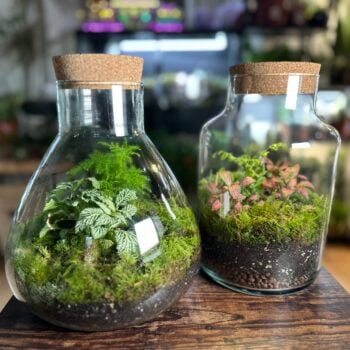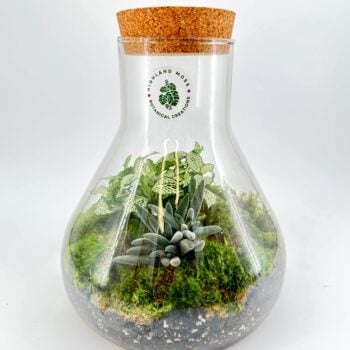


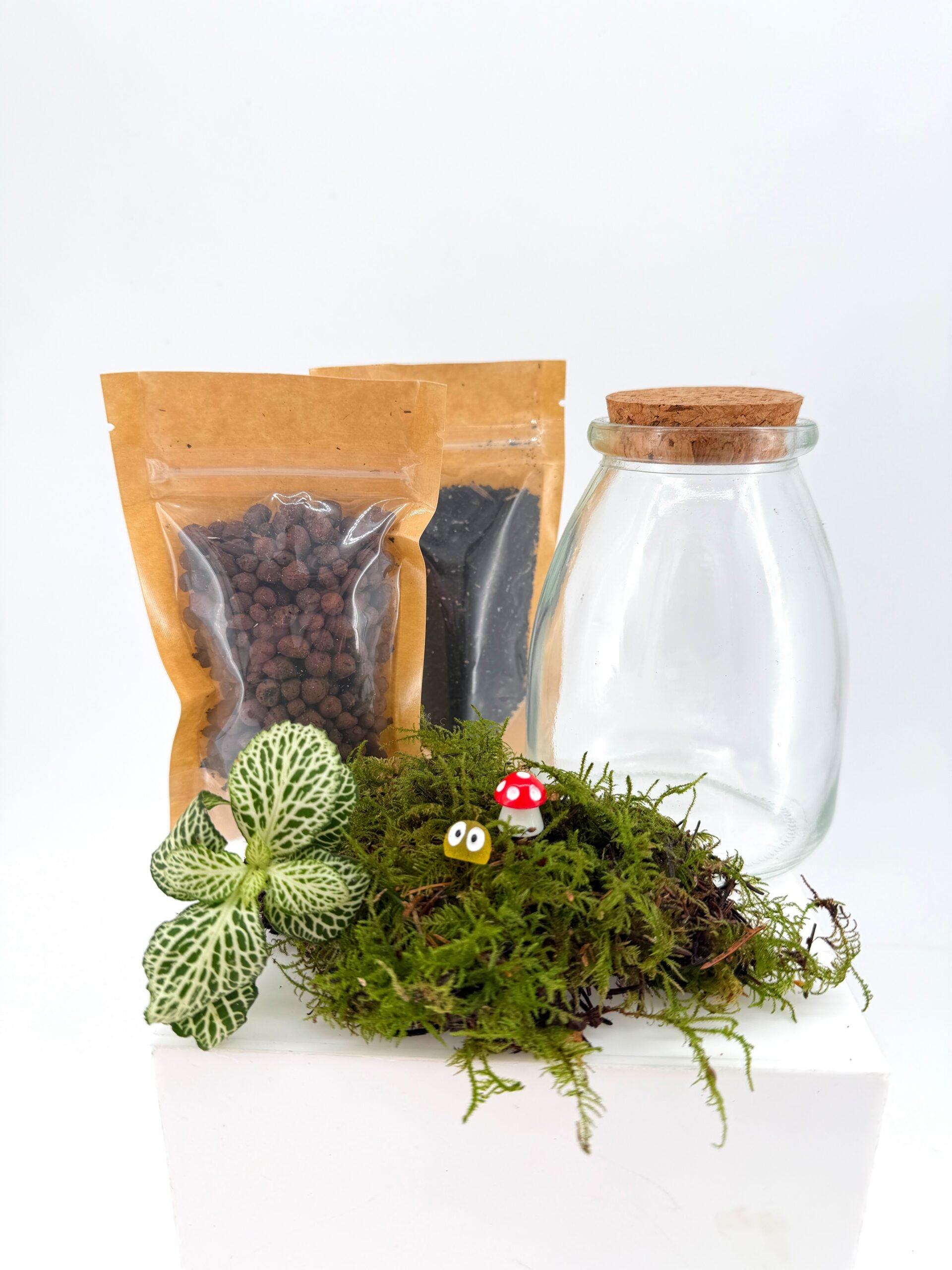
Welcome to your wee terrarium build guide.
This page explains what a mini terrarium is, why we use Fittonia, and how to assemble your kit step by step. You will also find a video to follow along, plus simple aftercare tips so your tiny world stays happy.
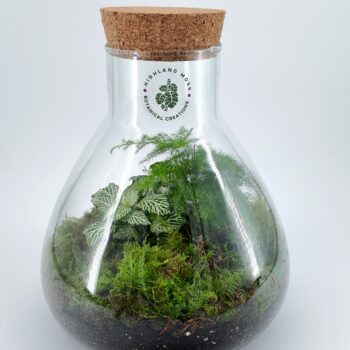
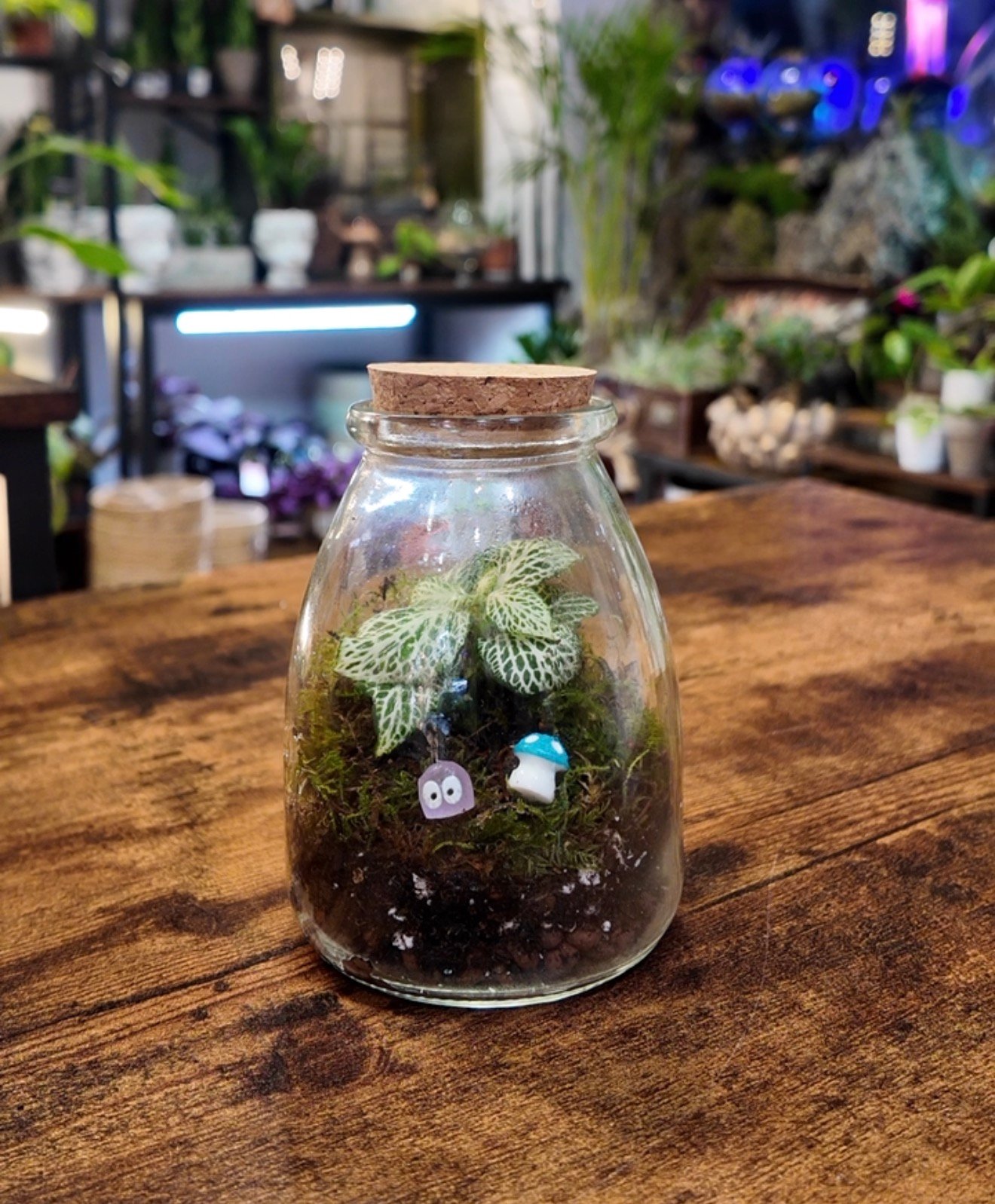
A mini terrarium is a small, enclosed garden inside a glass container. Once built, it creates its own little microclimate. Moisture evaporates, condenses on the glass, then drops back into the soil. This means it usually needs very little watering compared to a normal houseplant pot. Usually a few drops every few months or even years.
Mini terrariums are ideal for small spaces, desks, shelves, and gifting. They are also a lovely hands on project that feels calming and creative, with a result you can enjoy every day.
Why we use Fittonia (Nerve Plant)
Fittonia is one of the best plants for mini terrariums because it loves warmth and humidity. It stays compact, grows well in a closed environment, and brings loads of character thanks to its patterned leaves. It is also very forgiving if you are new to terrariums, which makes it perfect for beginners.
Your Fittonia and decoration colours may vary. That is part of the charm, every kit is unique..
Why this kit is easy and cute
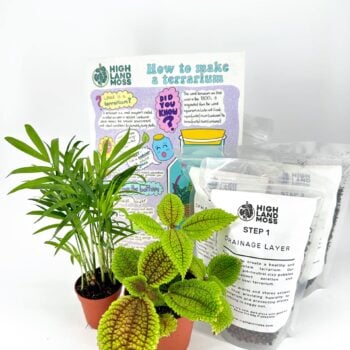
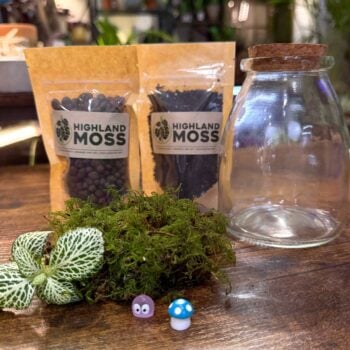
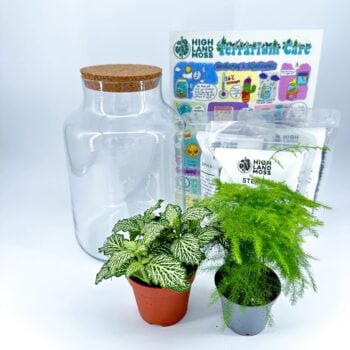
This kit is designed to be simple, tidy, and quick to assemble, even if you have never made a terrarium before. The jar is a handy size, the layers are pre measured for you, and the final look is a cute little micro world with moss and mini decorations.
Watch step by step: how to make your mini terrarium with Highland Moss DIY kit
Step 1: Prepare your space
Prepare all components. Choose a flat surface with good light. Lay down kitchen roll. Give the inside of the jar a quick wipe if needed.
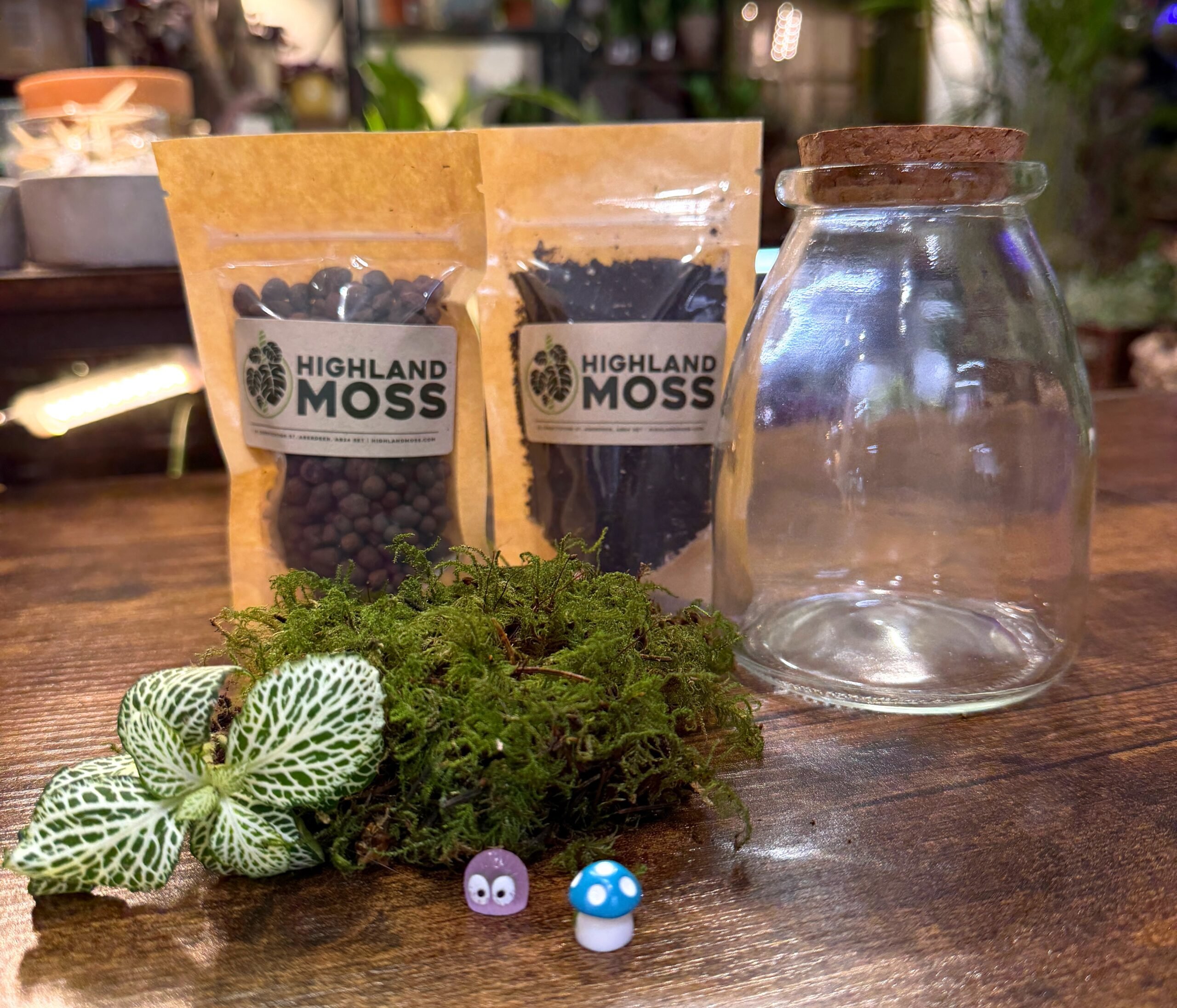
Step 2: Add the drainage layer
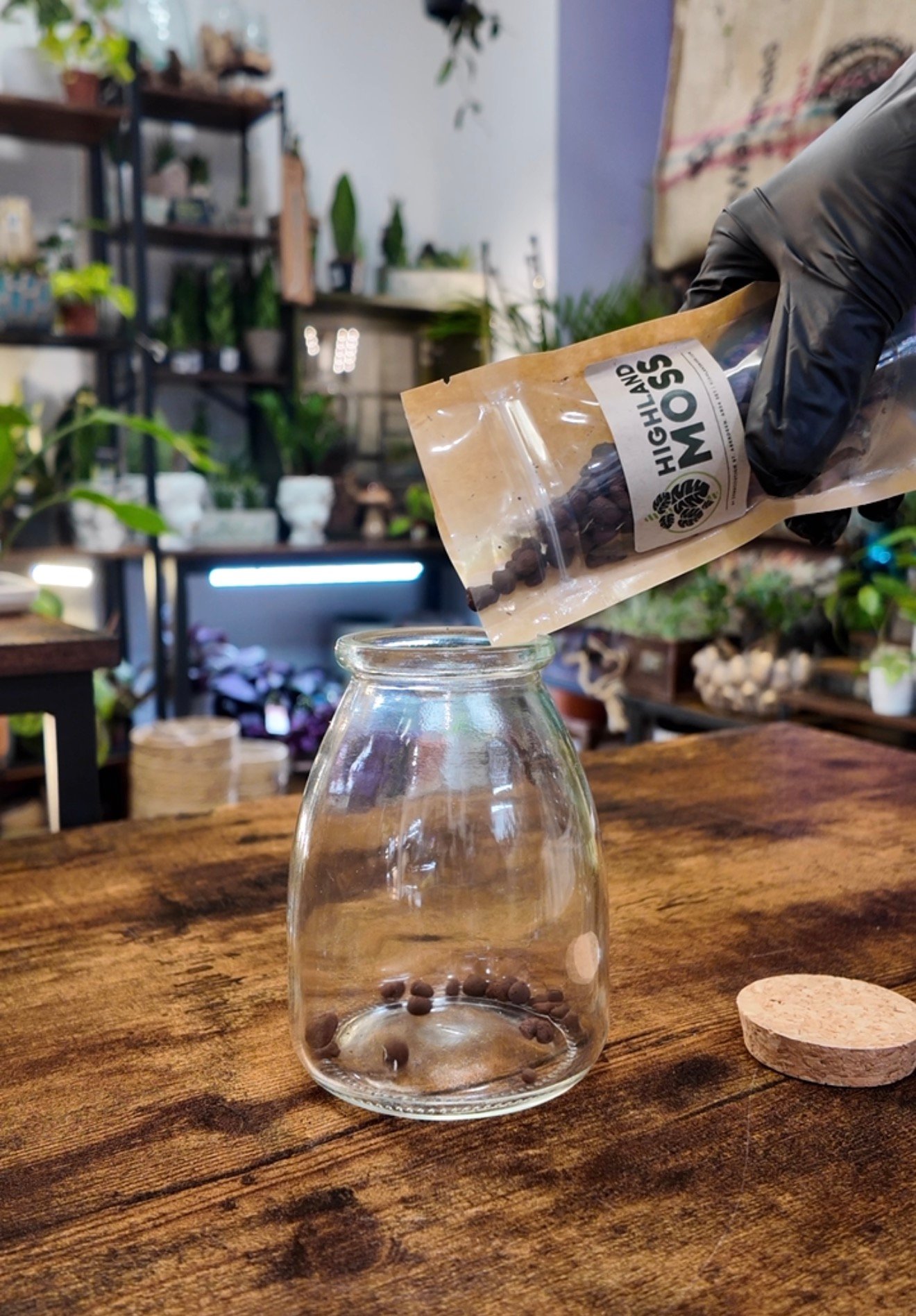
Pour the clay pebbles into the bottom of the jar. This layer helps keep excess moisture away from the roots and reduces the risk of soggy soil.
Tip: Tap the jar gently to level the pebbles
Step 3: Add your terrarium soil
Add the soil on top of the pebbles. Aim for a smooth layer with enough depth for the Fittonia roots. Use the plastic spade to tidy the sides for a clean look.
Tip: Tap the jar gently to level the pebbles
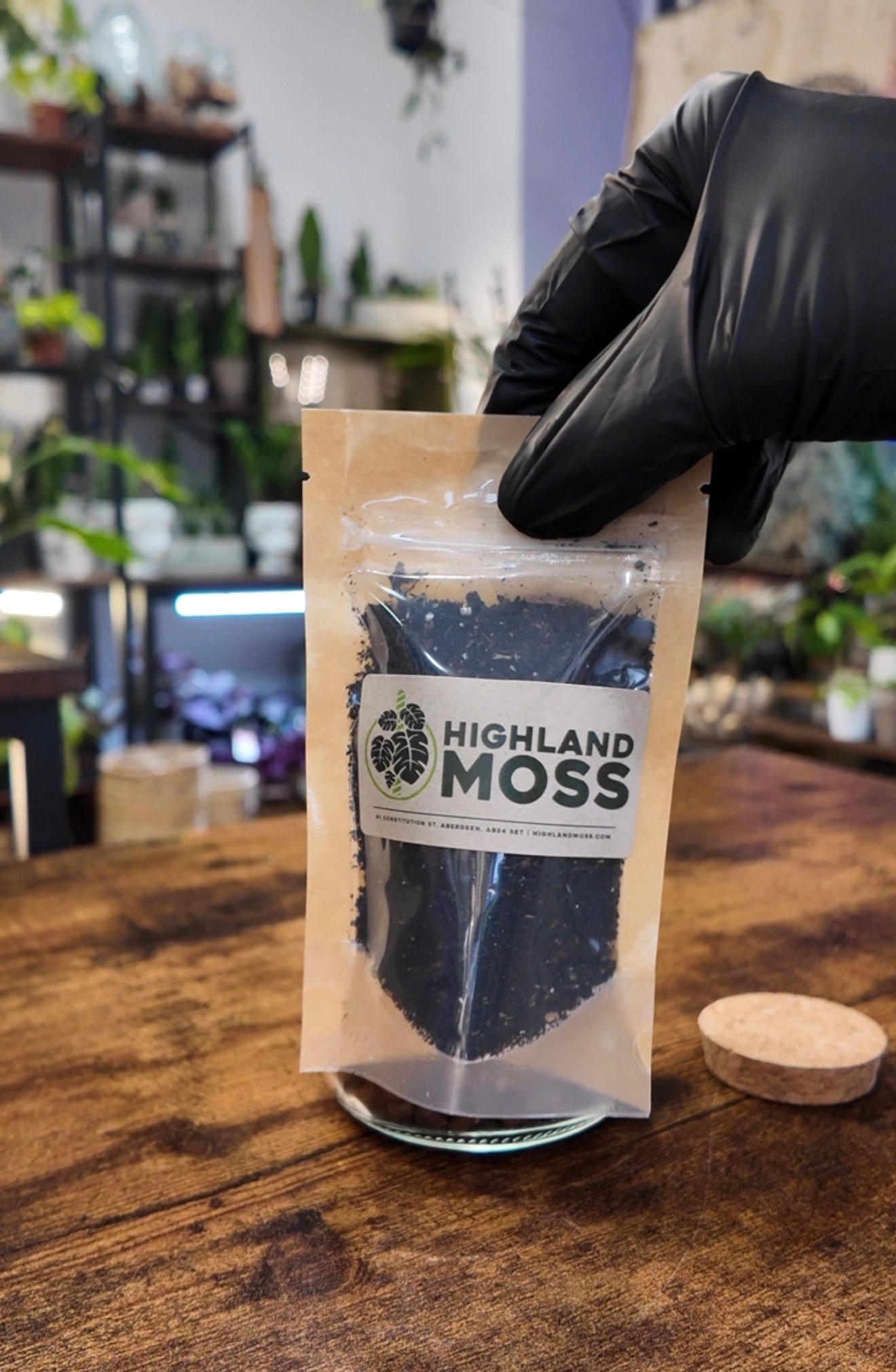
Step 4: Add the feather moss
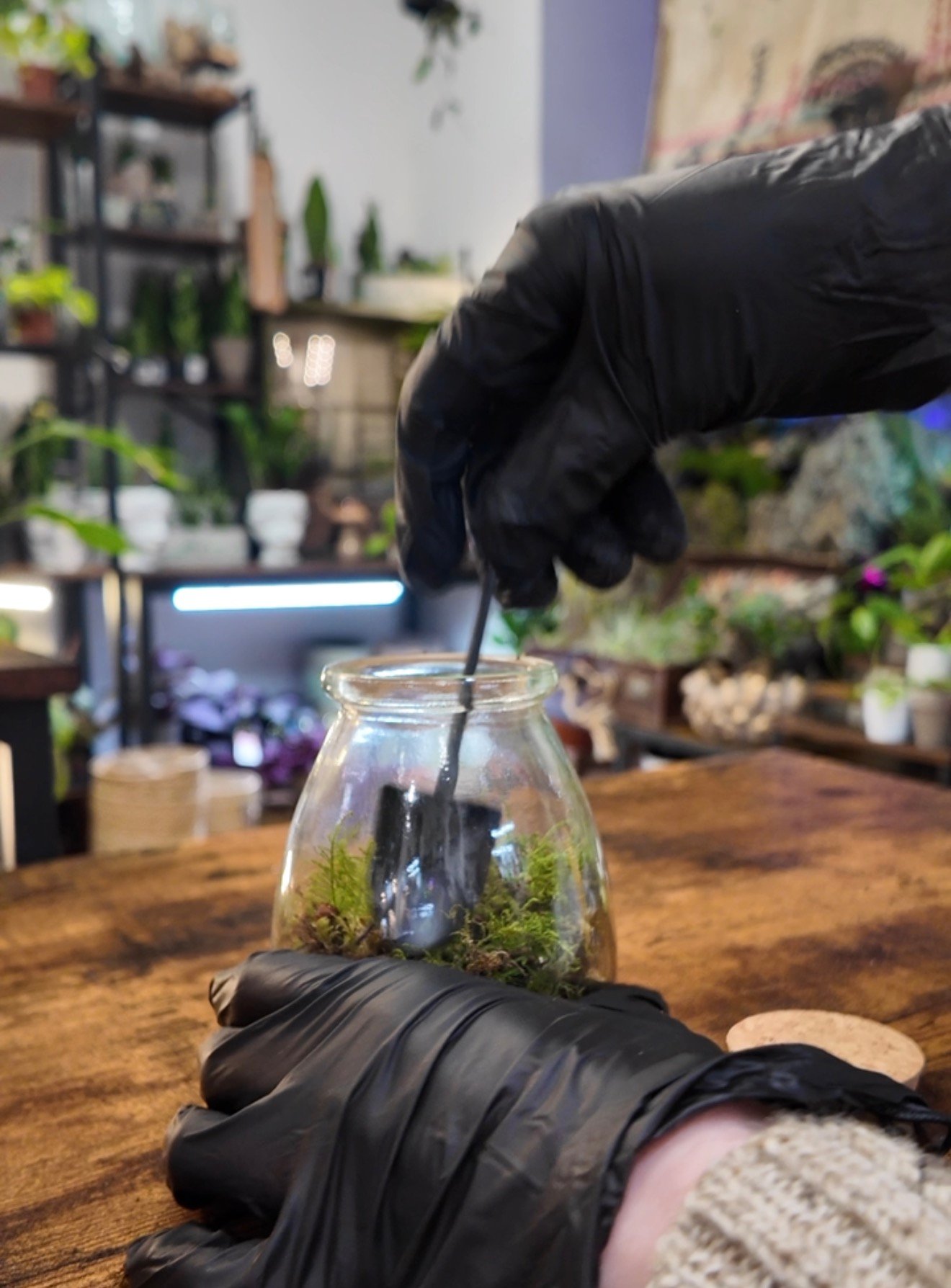
Place the feather moss on the top of the soil. You can create a full carpet look or leave small soil areas visible if you prefer this style. Make a hole in the middle of the moss to make planting fittonia easier.
Tip: Tweezers make this step extra neat, especially in a smaller jar.
Step 5: Plant the Fittonia
Take the Fittonia out of its nursery pot and gently loosen the roots a little. Make a small hole in the moss and tuck the plant in. Firm the soil and moss around it so it feels stable.
Tip: Keep the Fittonia leaves off the glass where possible. It helps reduce condensation between leaves and glass and prevent rot.
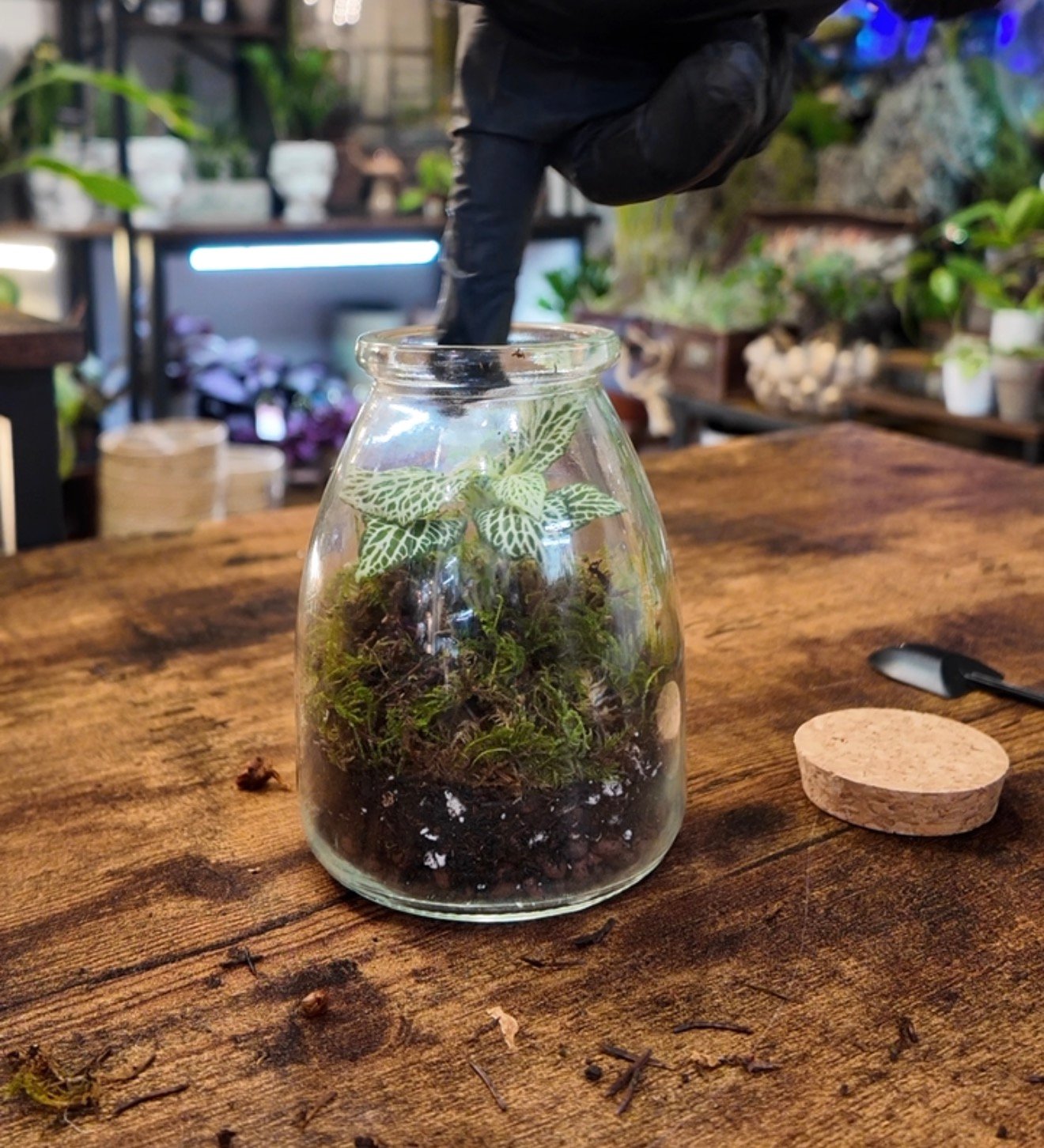
Step 6: Add your mini decorations
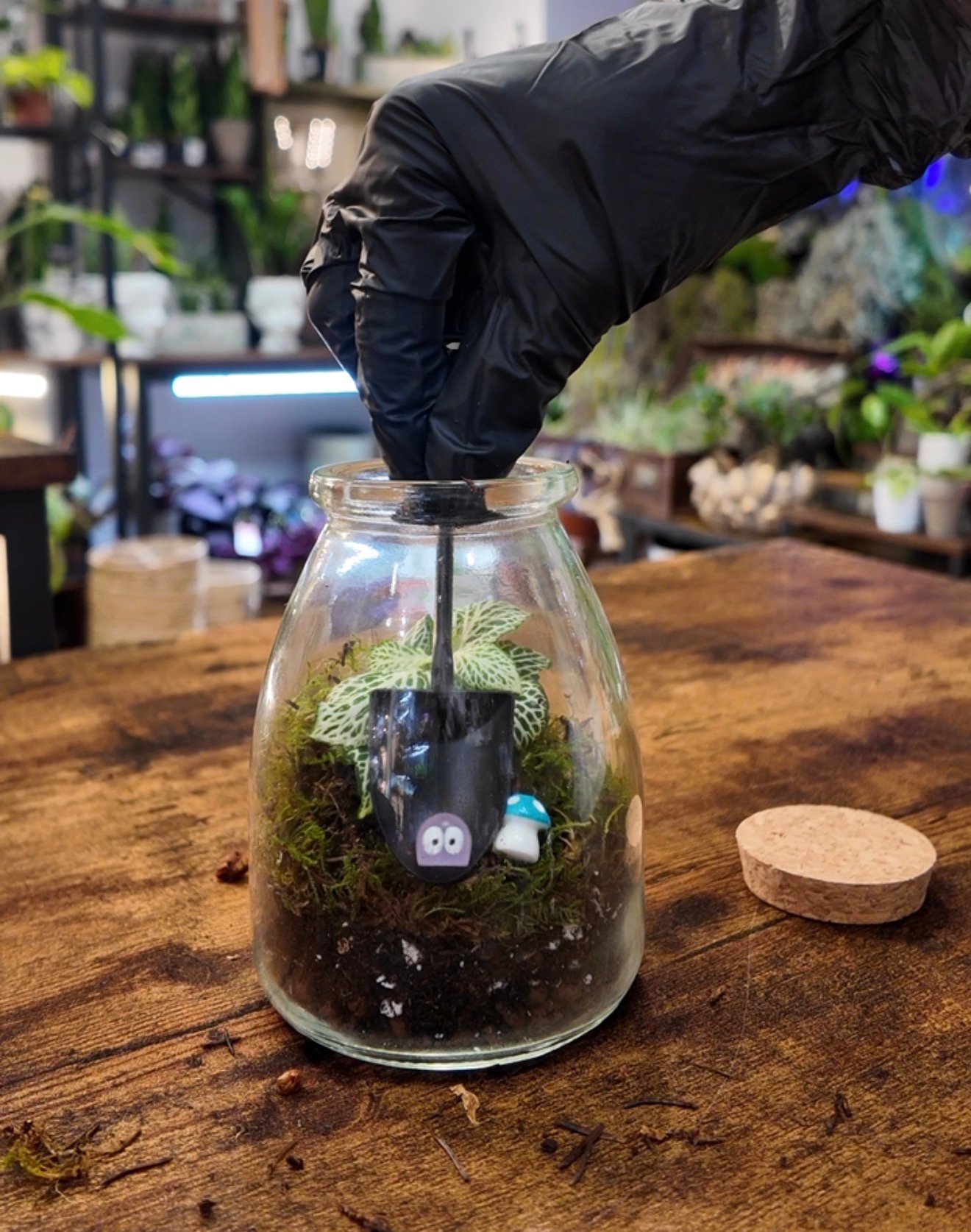
Place your decorations where they feel balanced. Try putting one piece closer to the front and another slightly hidden for a cute, layered scene.
Tip: You can add own decorations like crystals, sea glass (clean the glass to remove soil) or small Lego figurines.
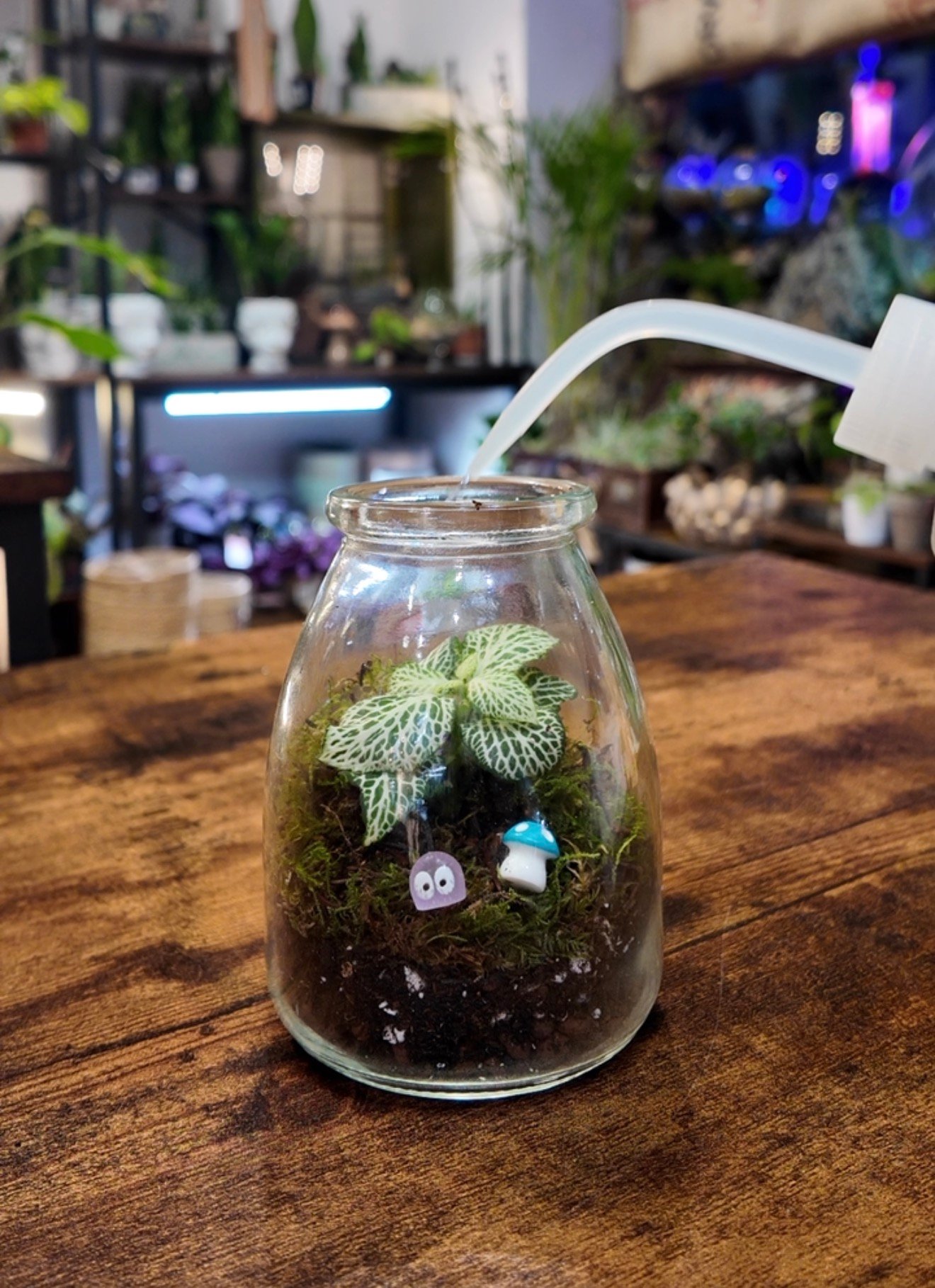
Step 7: First mist and close the lid
Give a light mist or add a tiny splash of water. No more than one spoon (10ml) of water. For this size jar, start small. You can always add a bit more later.
Then pop the cork lid on.
Where to place your mini terrarium
- Bright spot with indirect light is best
- Avoid harsh direct sun, especially on a windowsill at midday
- Keep away from radiators, fires, and very cold draughts
Aftercare: keeping your terrarium healthy
A mini terrarium should not need regular watering like a normal houseplant.
Condensation check
-Light misting on the glass in the morning that clears by midday is perfect
-Heavy condensation all day means it is too wet
-No condensation at all for long periods can mean it is too dry
When to water
Only add water if the soil looks dry and there is no condensation for several days. If the moss feels dry to touch and fittonia plant looks thirsty add a very small amount and reassess the next day.
Ventilation
If it looks too wet, take the lid off for 1 to 3 hours, then close it again. Repeat daily until it balances out. Otherwise do not open. The terrarium does not need oxygen from outside.
Trimming
Fittonia can grow steadily in a terrarium. If it gets too tall or crowded, pinch back a few stems to keep it compact and cute. You can use long terrarium scissors.
Mini terrarium FAQ
How long will a mini terrarium last?
With the right care, it can thrive for years.
Can I open it often?
You can, but you do not need to. It is designed to stay closed most of the time. You can open it to trim plants in necessary.
Is it good for beginners?
Yes. This is one of the easiest types of terrarium to start with, especially using Fittonia. This DIY mini terrarium kit with all you need is perfect for beginners and kids.