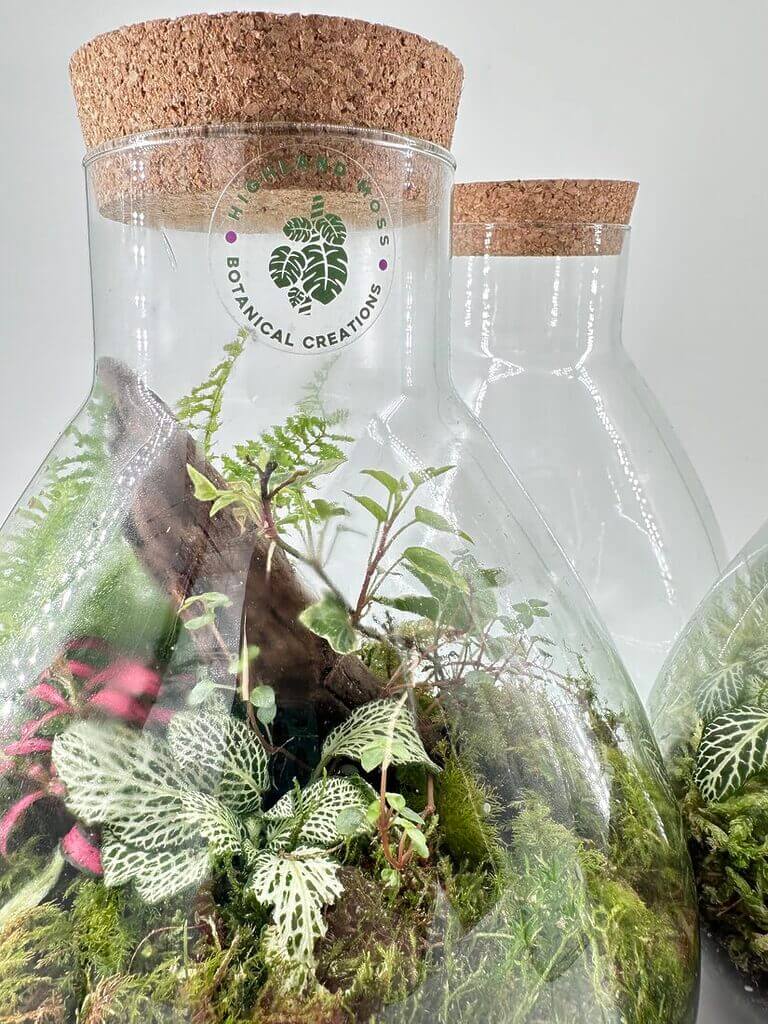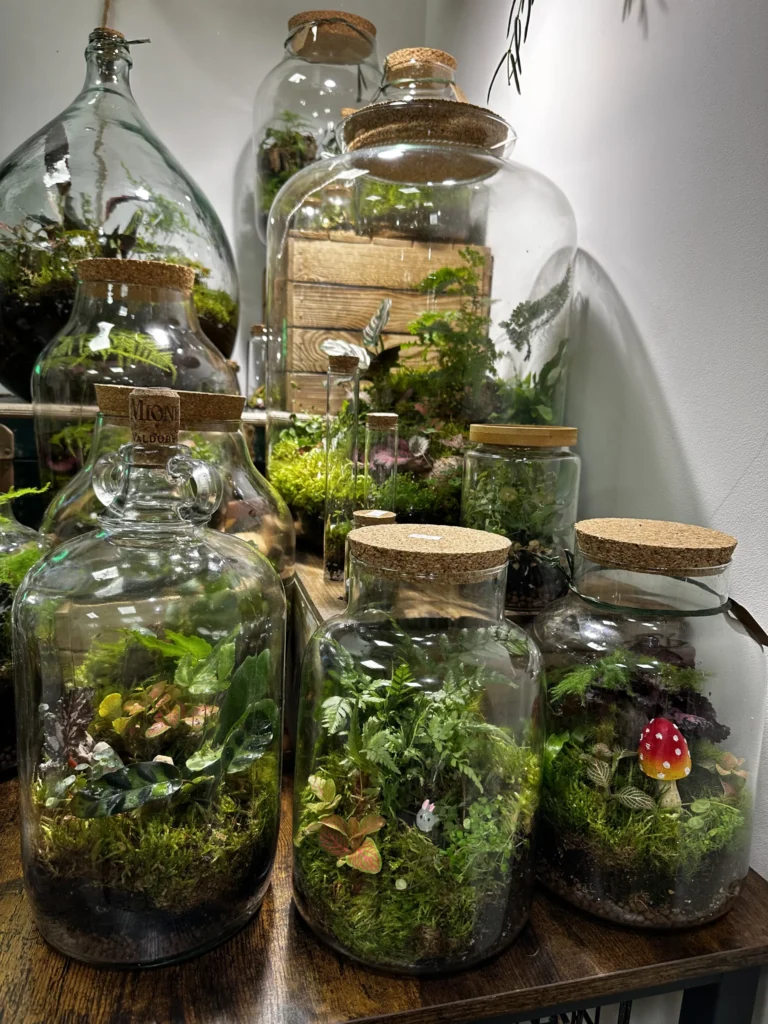

The modern terrarium has become a favourite way to grow plants indoors, but its origins lie in one remarkable accident in early nineteenth century London. The discovery was made by the physician and naturalist Nathaniel Bagshaw Ward, whose curiosity about nature changed both plant science and global horticulture forever. His early experiments revealed how plants could survive inside a sealed environment, leading to the creation of the first true terrarium and the later development of the famous Wardian case.
A Chance Observation That Started the Terrarium Revolution
Ward had always been fascinated by how plants grew, especially the difficulty of keeping delicate species alive in polluted Victorian cities. His breakthrough did not come from plant research at all. He was observing moth cocoons inside sealed glass jars when he noticed something unexpected. A small fern seedling and a blade of grass had begun to grow inside one of the jars. The container had not been opened for months, and no water had been added, yet the plants were healthy and green.
Inside the glass jar, a natural cycle had formed. Moisture rose from the soil, condensed on the cool surface of the glass, and dripped back onto the earth. This repeated cycle created a perfect balance of humidity for the plants. The enclosed air allowed them to recycle their own oxygen and carbon dioxide. Ward realised he had stumbled upon a naturally functioning closed ecosystem.
The Birth of the First Terrarium
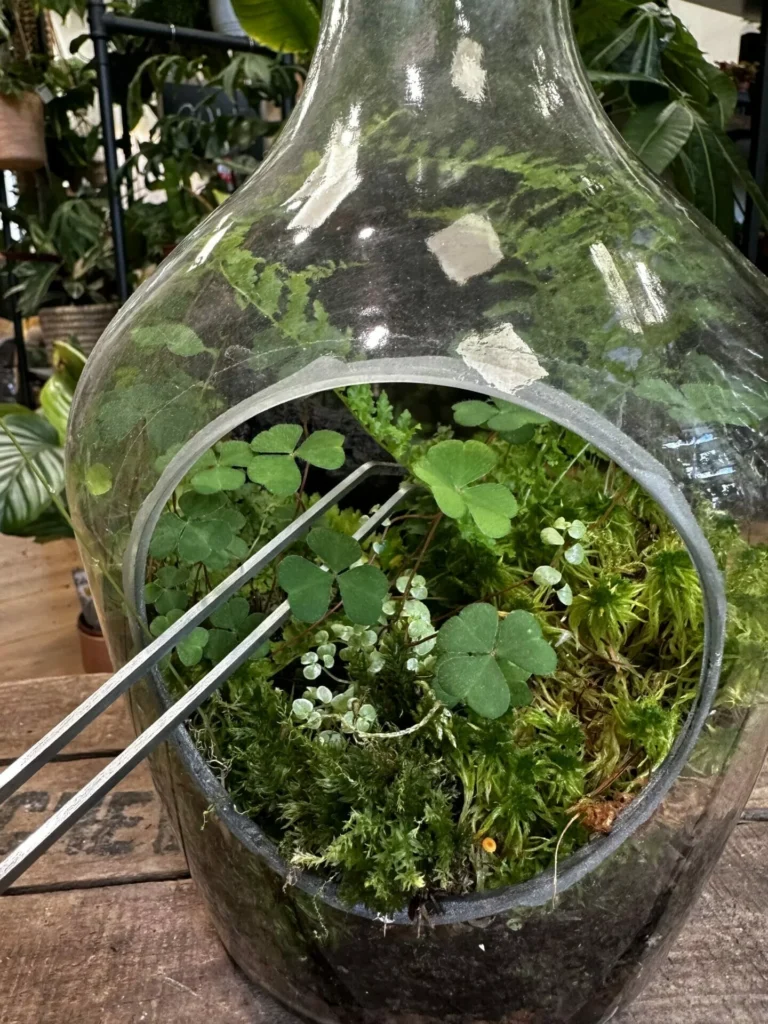
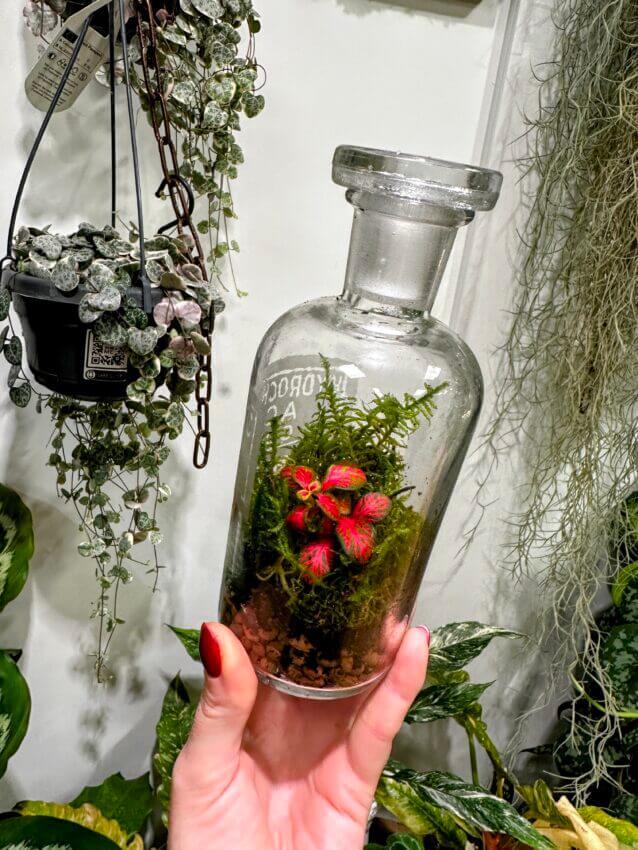
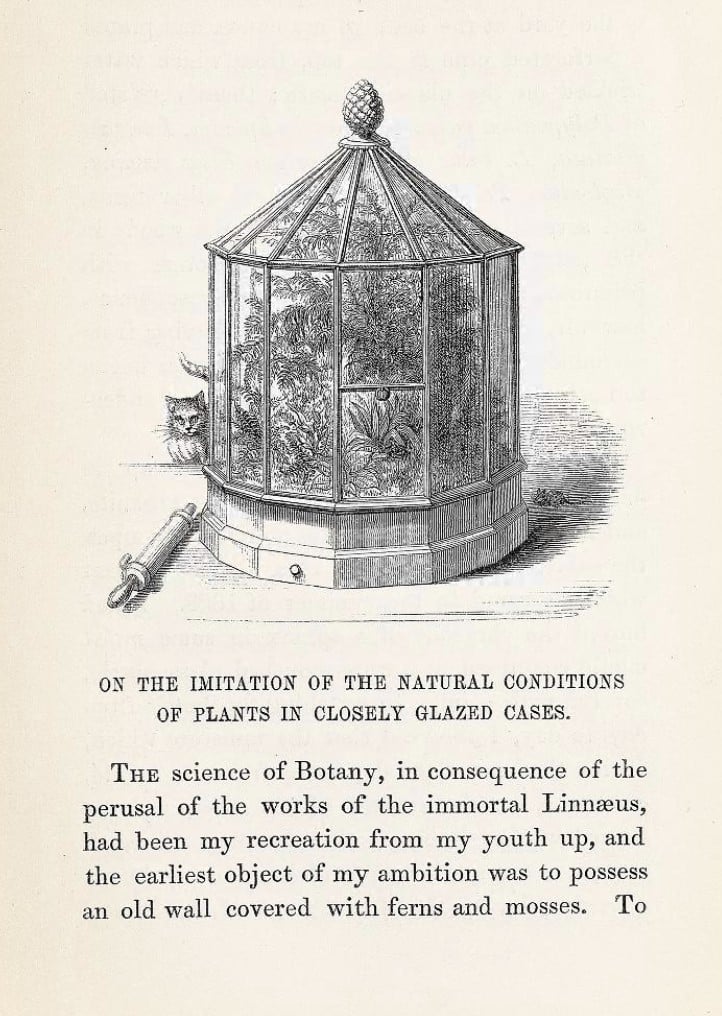
Inspired by the discovery, Ward created larger sealed cases to test whether other species could flourish in the same conditions. The results were impressive. Ferns, mosses and other humidity loving plants grew with almost no care. London’s smoky atmosphere, which normally caused sensitive plants to die quickly, could not reach them inside their sealed environments. Ward had created the first true terrarium.
These early glazed cases demonstrated something ground-breaking. Plants could be grown in a completely enclosed container with no watering and minimal attention. The stable humidity and protection from pollution allowed species to thrive that had previously been impossible to keep indoors.
A Breakthrough That Changed Global Plant Transport
At the time, transporting plants between continents was almost impossible. Sea voyages lasted months, and salt spray, harsh winds and drought killed most specimens long before they reached their destination. Ward’s sealed cases changed this immediately.
Plants travelling inside these enclosed boxes arrived alive and healthy after long ocean journeys. Ferns from Australia, orchids from Asia and many other rare species were successfully transported to Europe for the first time. This led to a major shift in botanical research, international trade and horticulture. The Wardian case became an essential tool for plant collectors, nurseries and botanical gardens.
Terrariums Become a Victorian Household Trend
The popularity of Ward’s invention spread quickly. Victorian homes were often dark and filled with coal smoke, making them unsuitable for delicate greenery. Inside a sealed case, however, ferns and tropical plants thrived with ease. The cases became highly fashionable, appearing in homes, conservatories and grand indoor displays.
These early terrariums were not only practical but decorative. People appreciated their ability to maintain plants with little effort, and they became symbols of refinement, curiosity and scientific interest.
A Closed Terrarium Ecosystem That Still Works Today
Ward’s discovery revealed the natural processes that support a closed terrarium. These principles remain the same today. A sealed terrarium:
• recycles moisture through evaporation and condensation
• maintains stable humidity for plant health
• balances its own oxygen and carbon dioxide
• protects plants from extreme temperatures and dry air
• requires very little watering or intervention
This self-sustaining cycle allows closed terrariums to remain healthy for years and sometimes even decades.
A Small Accident with a Lasting Legacy
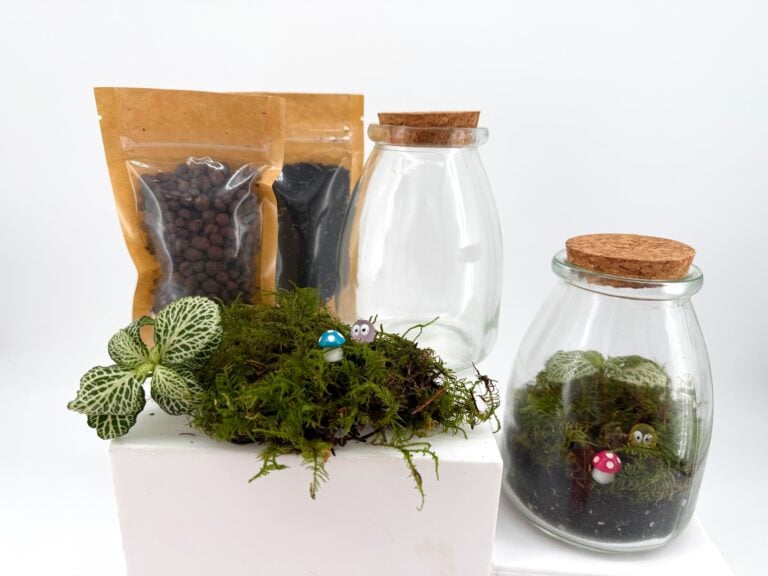
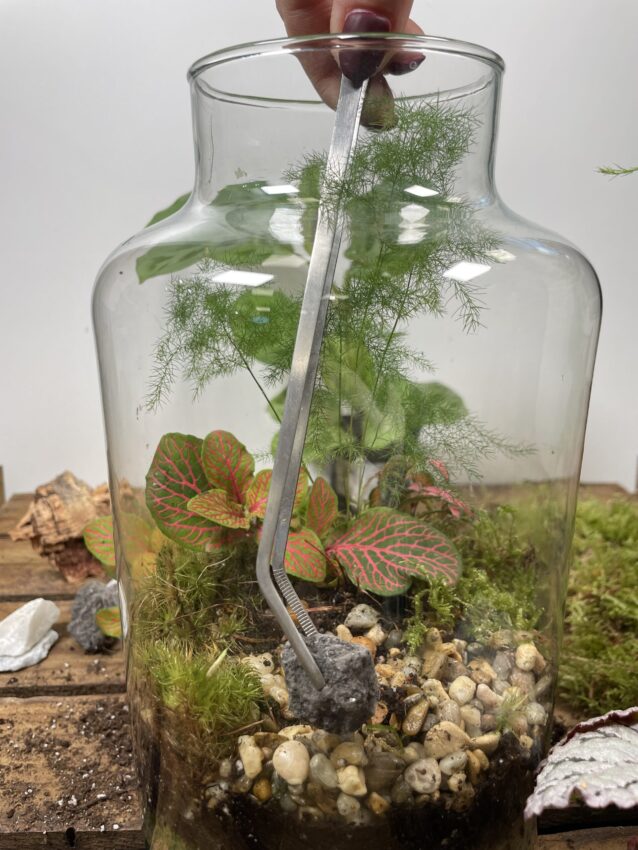
At Highland Moss, our small Scottish business continues this tradition by helping people experience the joy of building and caring for their own miniature ecosystems. Our DIY terrarium kits, hands on terrarium workshops and ready made terrariums follow the very same natural processes that fascinated Ward. Every kit includes the correct layers, high quality materials and clear guidance to help beginners and enthusiasts create a thriving closed terrarium at home.
We ship our terrarium, kits and supplies anywhere in the UK, making it easy for anyone to enjoy this beautiful self sustaining world behind glass.