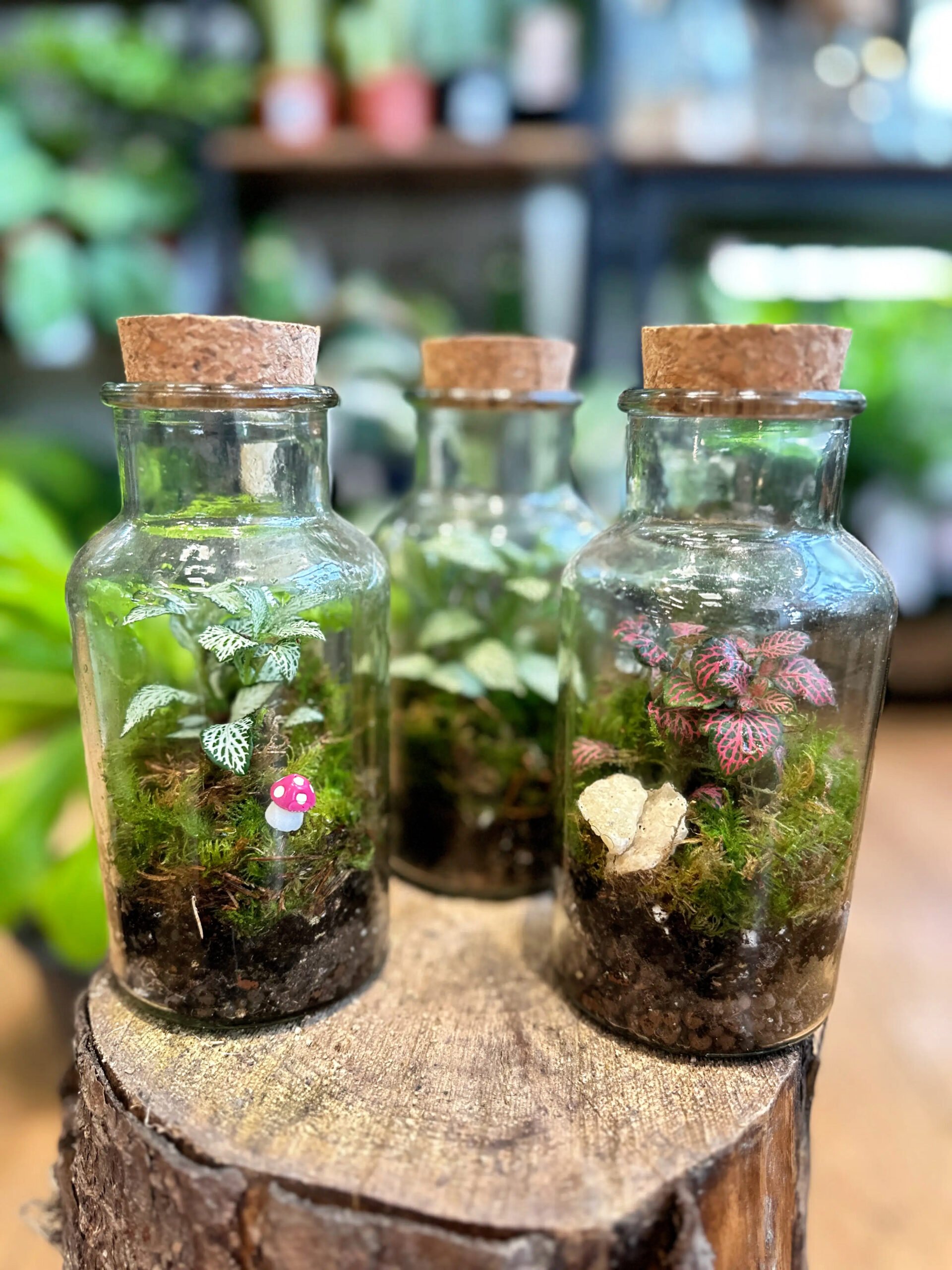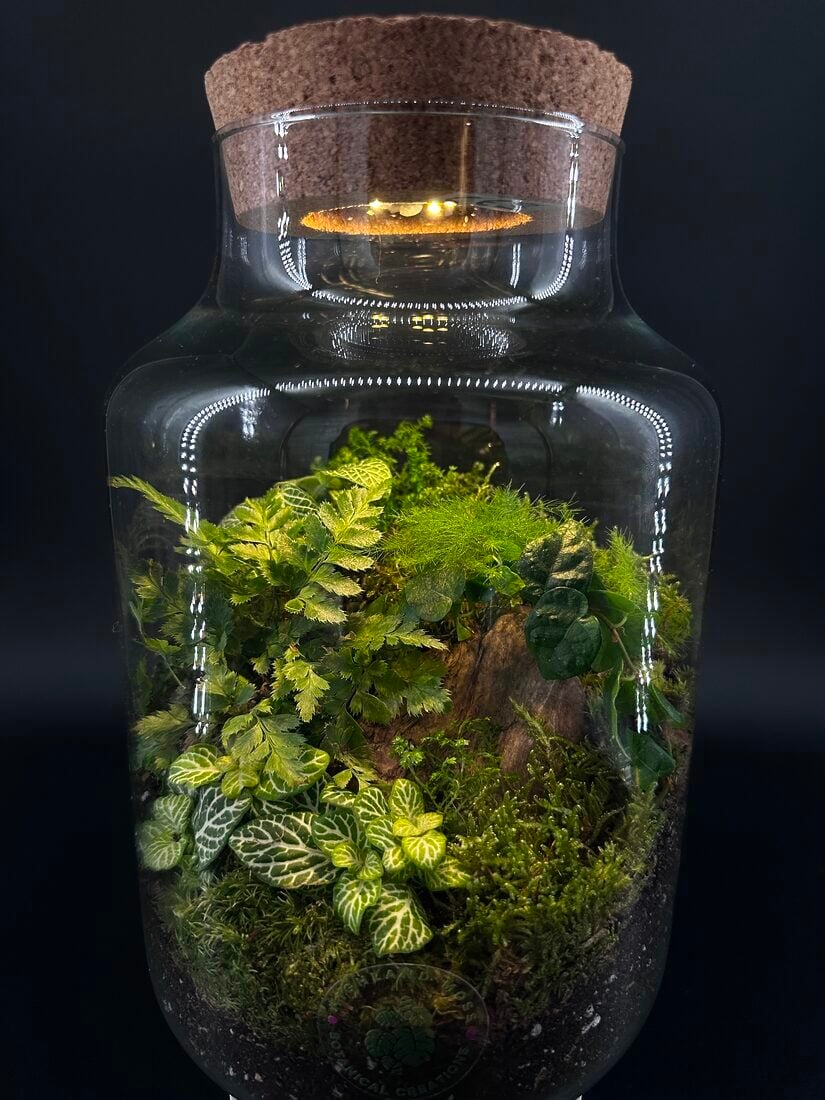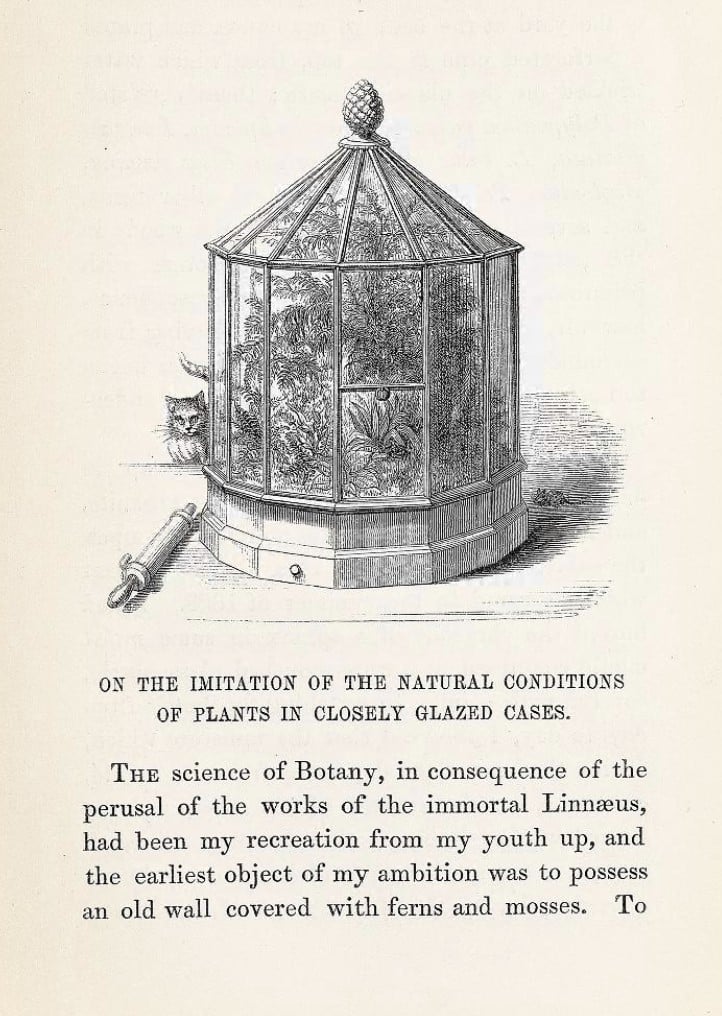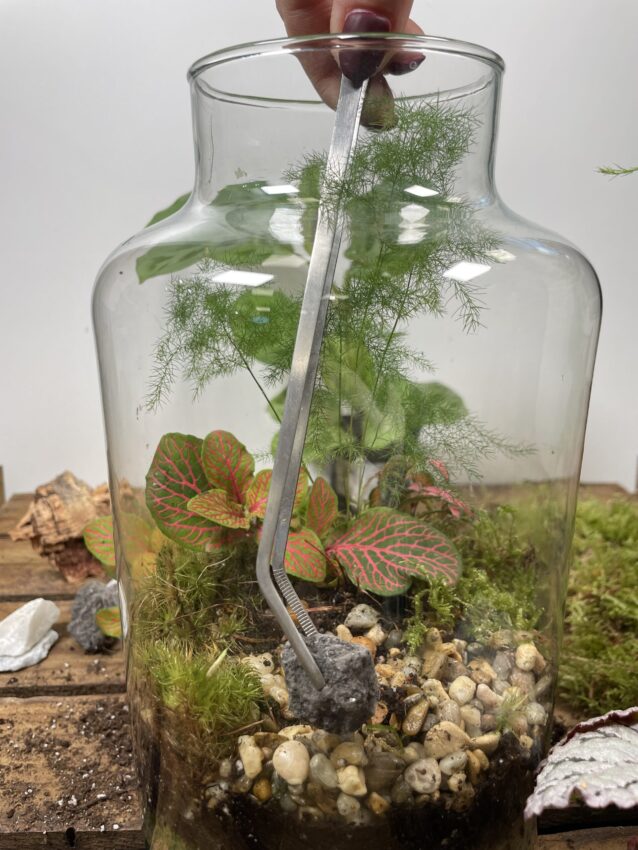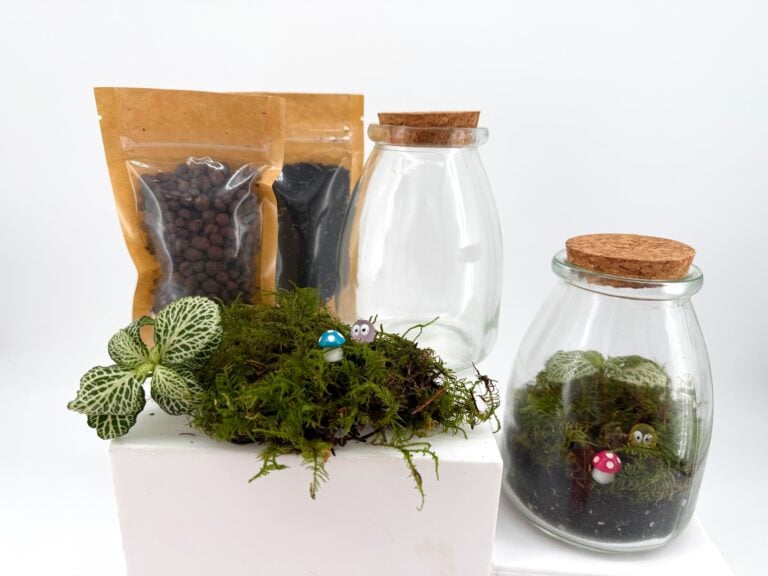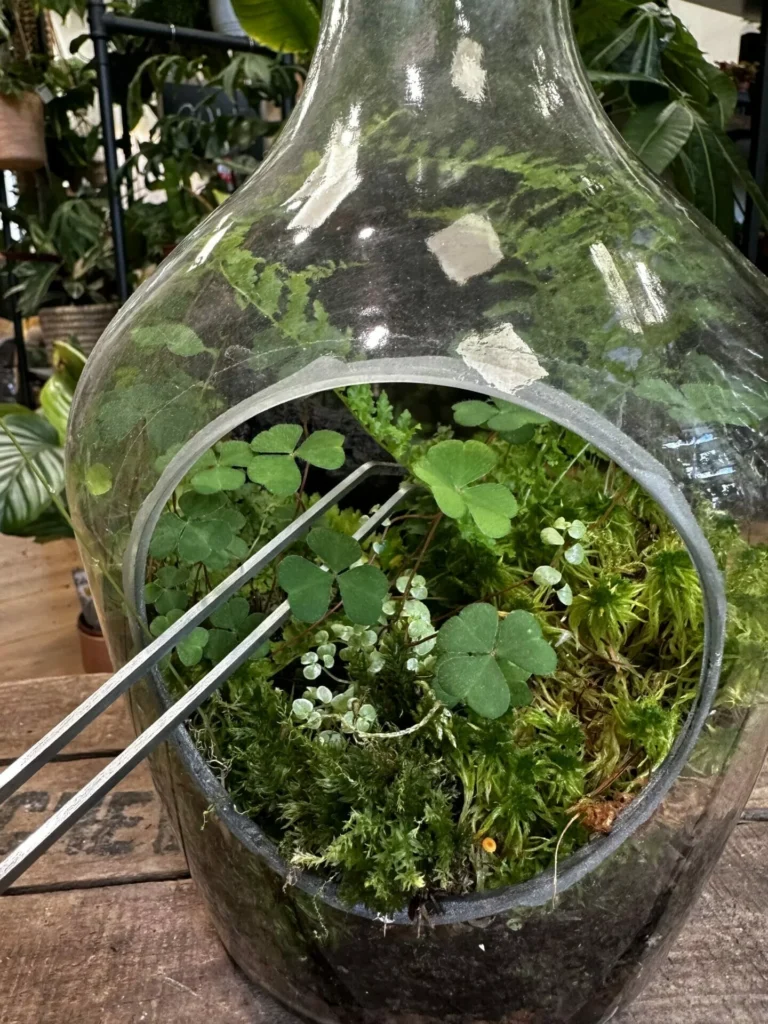


A closed terrarium is a sealed micro-ecosystem where plants, water and microorganisms recycle the same resources in a continuous loop. It works by balancing light, air, water and living organisms in a clear container, creating a thriving miniature world that needs very little care. Many people search for answers like how does a terrarium work, how to care for a terrarium and how to water a terrarium; the science behind it is both simple and fascinating.
Below is a clear explanation of the air cycle, the water cycle, light requirements and the essential role of springtails.
The Air Cycle inside a Closed Terrarium
Photosynthesis
During the day, plants carry out photosynthesis. They absorb carbon dioxide and water, then use light energy to produce glucose for growth and release oxygen into the terrarium atmosphere. This provides a steady supply of fresh air for the internal ecosystem.
Respiration
At night or in low light, plants and microorganisms switch to respiration. They use oxygen to break down stored sugars, releasing carbon dioxide and water. This keeps the air balanced even when photosynthesis pauses.
Together, photosynthesis and respiration maintain a stable gas cycle that allows the terrarium to function without needing fresh air from outside.
The Water Cycle inside a Closed Terrarium
A closed terrarium constantly recycles the same water through a natural and efficient loop. This is why people often wonder terrarium how much water or if they ever need watering again.
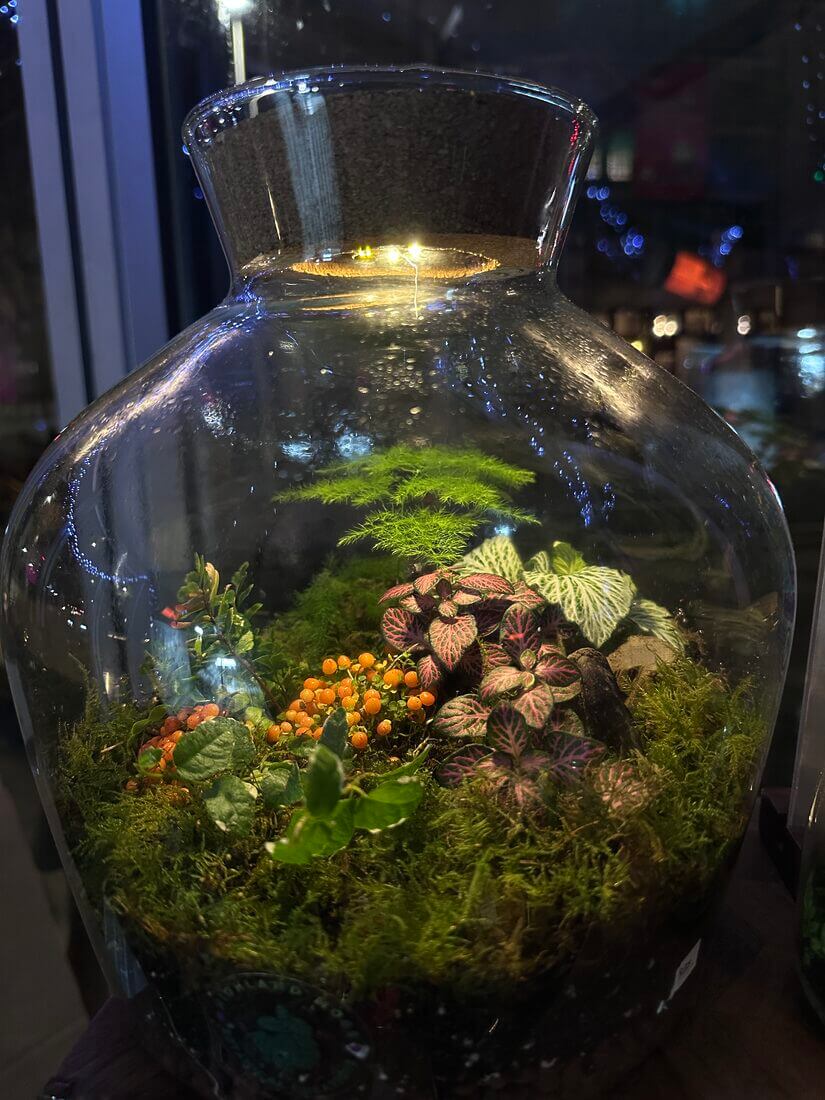
How a self-sustaining ecosystem is created
A closed terrarium constantly recycles the same water through a natural and efficient loop. This is why people often wonder terrarium how much water or if they ever need watering again.
Water is added once during assembly
This initial watering provides all the moisture the system needs.
The substrate absorbs and stores water
Soil, moss and organic matter hold moisture through capillary action
Roots take up water and transport it through the xylem
Water is taken in by the roots and carried through the plant by the xylem (soft tissue).
Transpiration occurs
Plants release water vapour through small leaf pores called stomata.
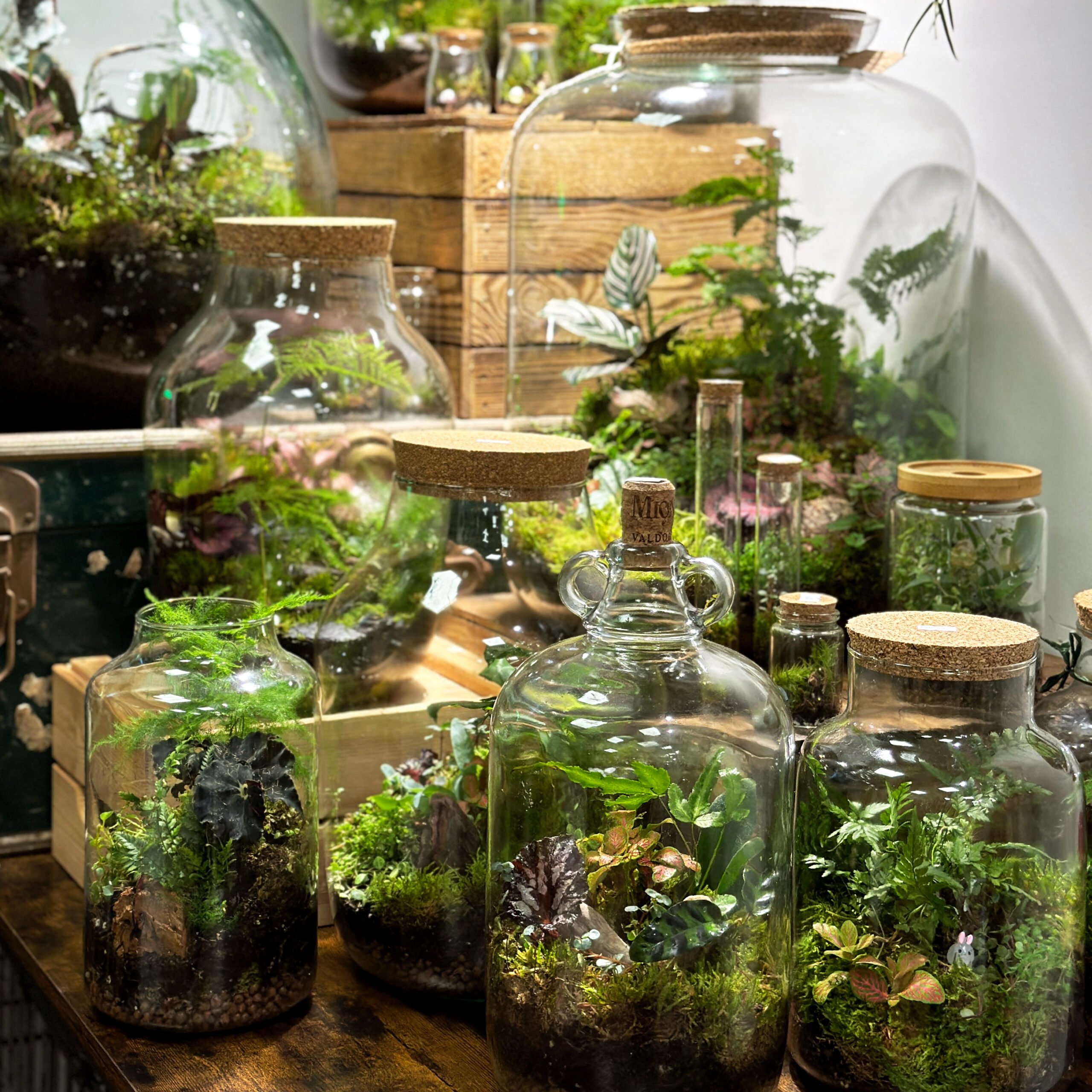
Condensation forms on the cooler glass surface
Vapour collects as droplets.
Droplets fall back into the substrate like gentle rain
This completes the cycle and maintains even moisture.
Because the water cycle repeats on its own, most closed terrariums do not need extra watering once they settle.
Does a Closed Terrarium Need Water?
Most closed terrariums remain perfectly balanced without additional watering. Some sealed terrariums in the world have stayed healthy for more than forty years without being opened.
At Highland Moss, many of our terrariums have stayed healthy for years with no watering at all. Very occasionally we open one to add a small amount of water, but in most cases the internal cycle takes care of itself.
Springtails in Terrariums: The Natural Cleaning Crew
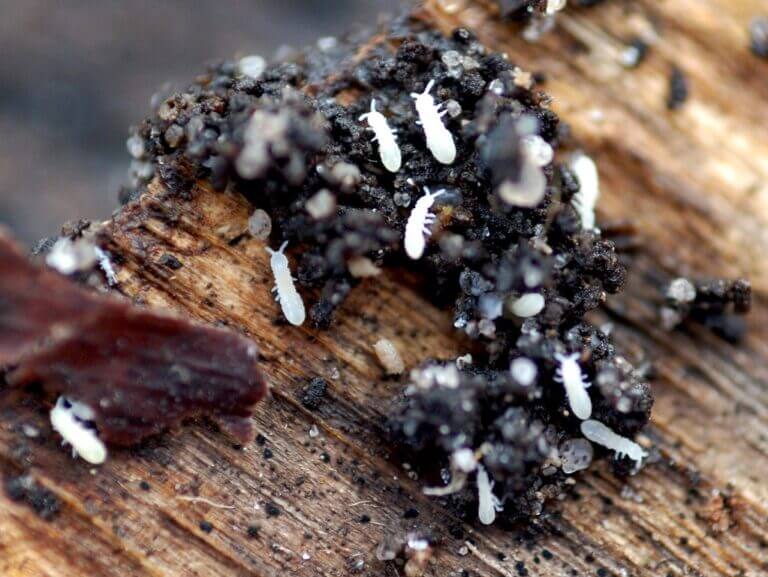
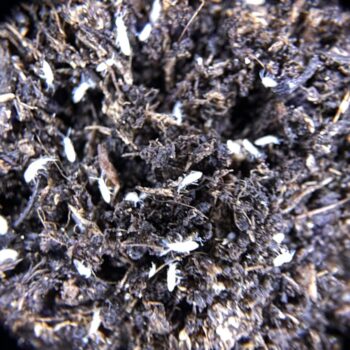
All Highland Moss closed terrariums include springtails. These tiny soil arthropods feed on mould, algae and decaying organic matter. They recycle nutrients, prevent mould outbreaks and help keep the ecosystem healthy.
Light and Placement
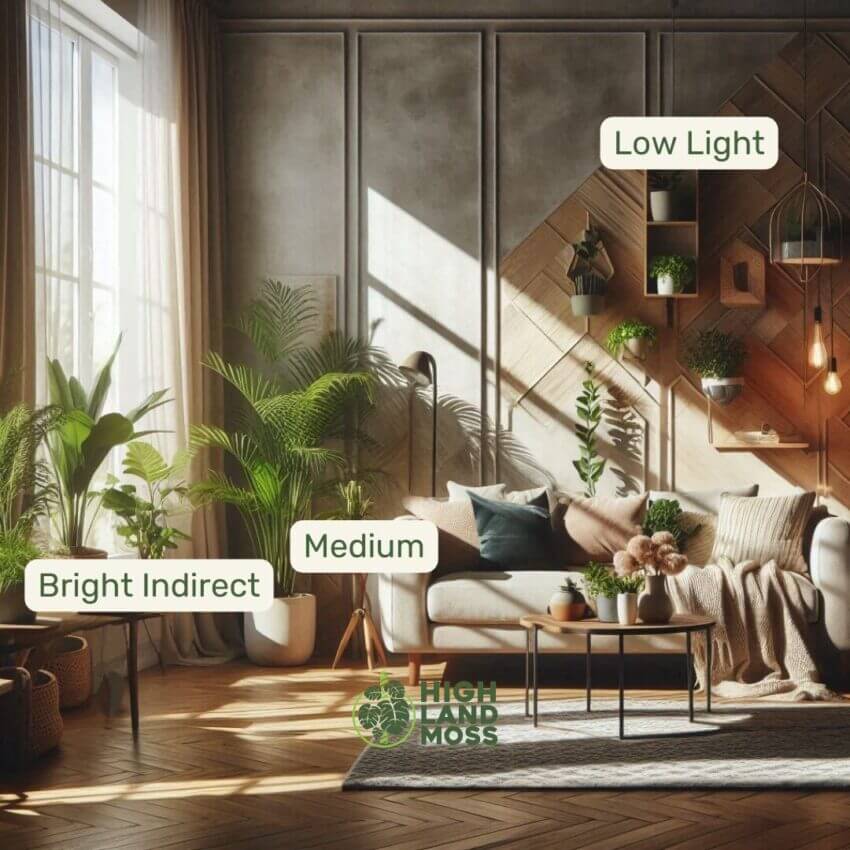
Light is the only ongoing external input a closed terrarium needs. Bright, indirect light supports photosynthesis and keeps plants healthy. Avoid strong direct sun, as this can cause overheating and excessive condensation. A shelf, table or north or east-facing windowsill is usually ideal.
How to Care for a Closed Terrarium
Closed terrariums are very easy to care for because they manage their own environment. Here is a quick guide:
A Miniature World in Balance
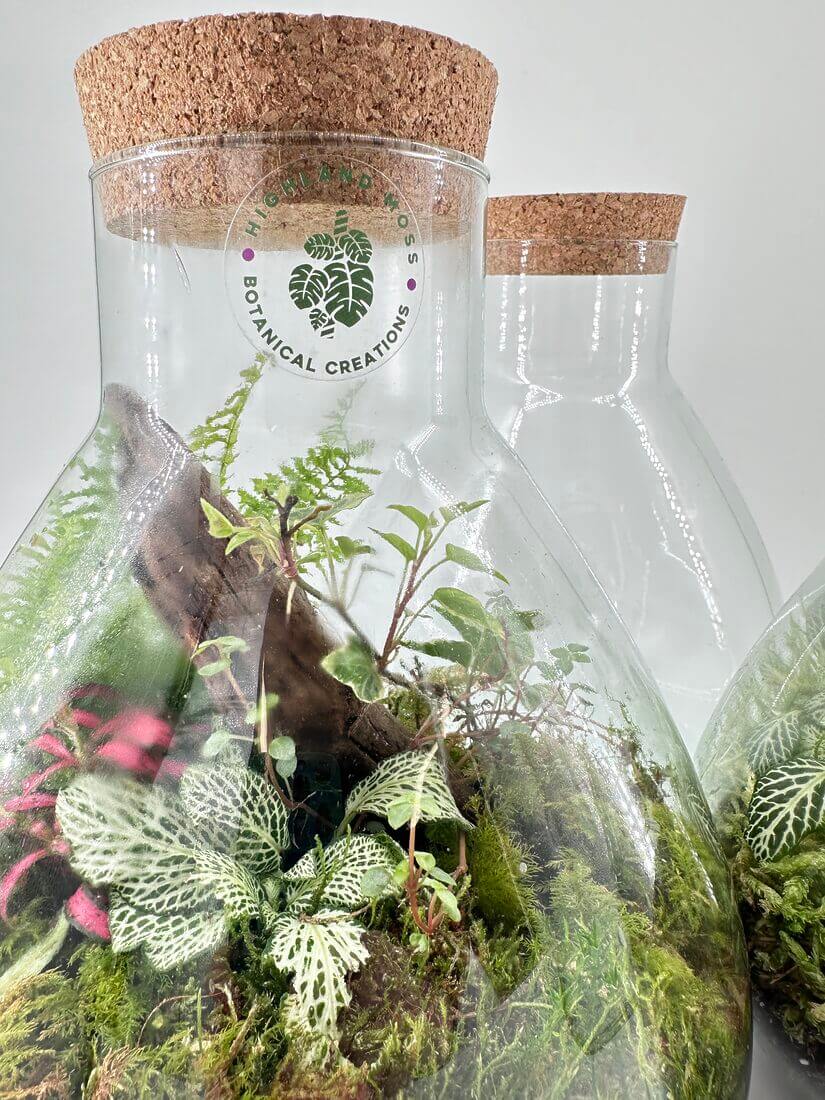
A closed terrarium is a beautiful example of how natural ecosystems work. Plants, water, microbes and tiny clean-up creatures form a stable loop powered entirely by light. It is a simple and low-maintenance way to enjoy a living ecosystem in your home.
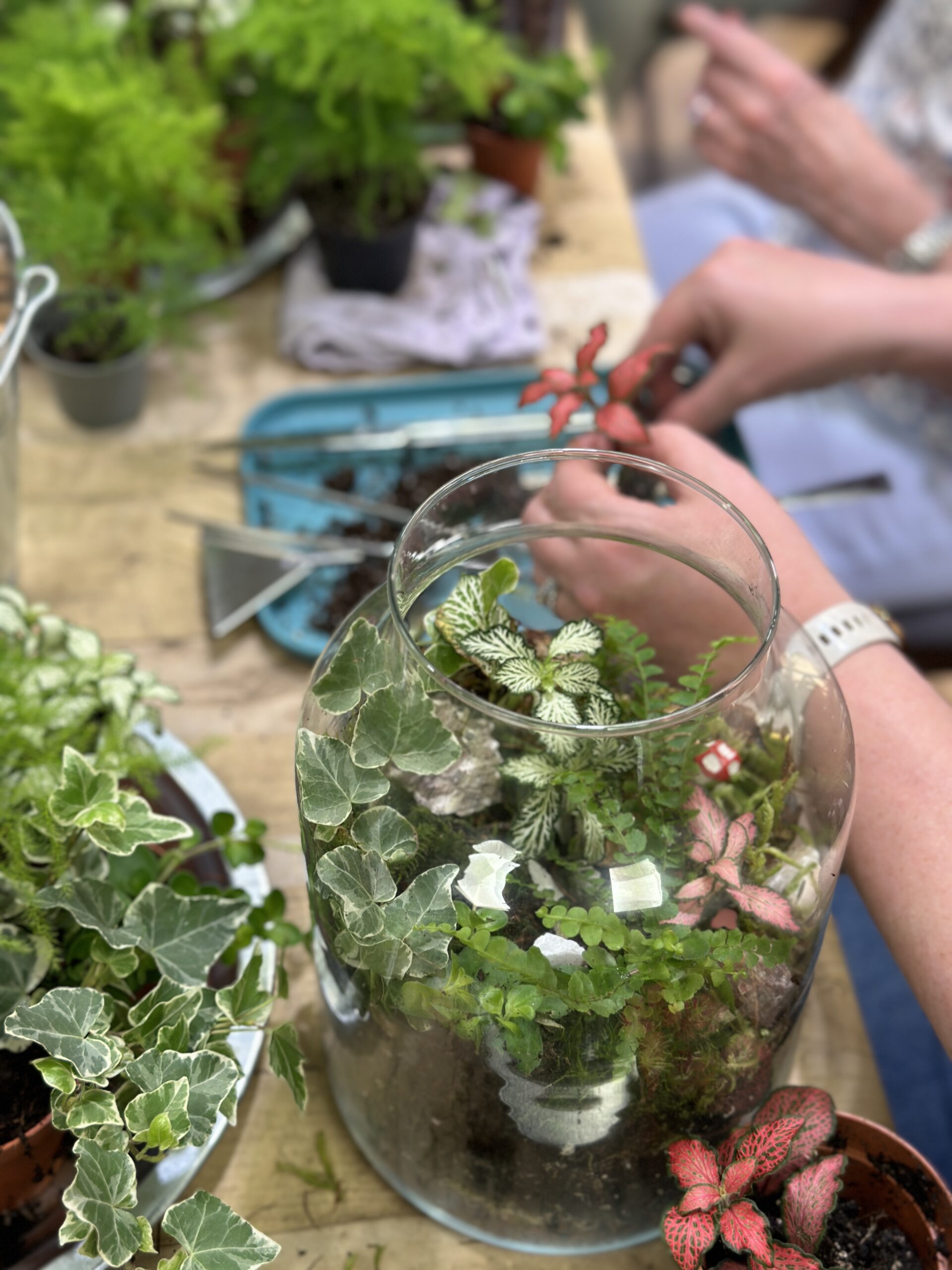
If you want to create your own, visit our shop, Highland Moss, for ready-made terrariums and DIY kits, we ship across the UK or if you can make it to Aberdeen, book our terrarium workshop.